Japanese American Internment Day of Remembrance
trcf marketing • February 16, 2026
Examining the present through a lens to the past
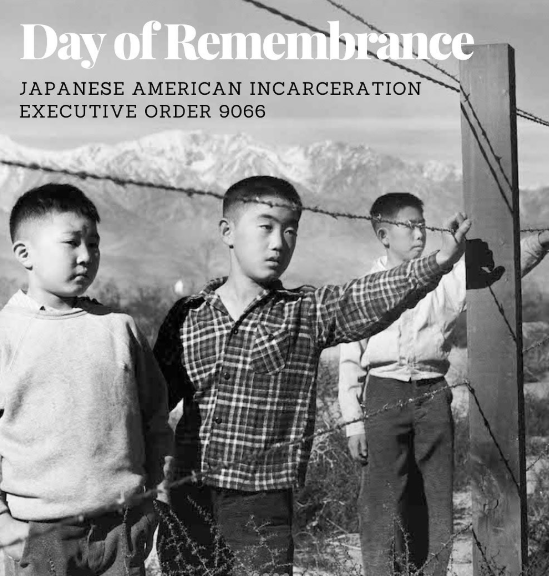
(Picture of three Japanese-American youth behind barbed wire, with the text "Day of Remembrance: Japanese American Incarceration Executive Order 9066." Picture credit:
WESPAC Foundation)
In 1942, after the attack on Pearl Harbor, the United States invoked the language of “national security” and fear mongering to commit one of the most notorious civil rights violations. Under Executive Order 9066, 120,000 people of Japanese ancestry were removed from their homes and forced into internment camps. These people were detained and imprisoned without hearings, reason, or charges; they were simply imprisoned because of their ethnicity. Families were given days, some given hours, to close businesses, sell property, and pack whatever they could carry. They were then transported to makeshift centers, which were often livestock facilities. They would often be there for months, before being transported to an internment camp, which included extremely inhumane conditions. Detainees faced overcrowded barracks, inadequate medical care, and constant surveillance and maltreatment from armed guards.
Today, ICE has detained about 70,000-75,000 people, marking a record high. ICE has kidnapped people off the street, entered homes and detained people with no warrant, shot U.S. citizens on the street with immunity, and incited violence in so many communities across the country. Detainees in ICE detention centers often have no contact with family and are housed in extremely inhumane conditions. These facilities lack adequate medical care, legal resources, and detainees face constant, militarized, violent surveillance. In terms of legality, ICE detainees often experience prolonged detention, lack of access to legal counsel, extremely backlogged courts, and are not given fair hearings, if any hearing at all. Most of these people have been detained simply because of the color of their skin, and the language they speak. Political leaders and human rights advocates have noted not only the inhumanity of current ICE operations, but also the unconstitutionality and illegality.
While we reflect on and remember the inhumanity of Japanese internment camps, it is also important to recognize the cycles of state violence. The United States has consistently utilized “national security” as a catalyst for racism, xenophobia, and fear. Japanese Internment Remembrance Day is not only about honoring those detained under Executive Order 9066, but it is also about questioning how such a grave injustice occurred in the first place. It serves as a reminder of how quickly civil liberties can be taken away when immorality is in power. The incarceration of Japanese Americans was once deemed just and necessary by those in power, but history has revealed a horrific crime against humanity. If remembrance is to mean anything, it must compel us to do better - to fight against injustice and inhumane treatment, it must force us to follow our moral compass.
My name is Maddie Morelli and I am in my final year of the BASW program at the University of Pittsburgh. For the 2025-26 school year, I will be interning at Three Rivers Community Foundation. I am extremely excited to learn from all the wonderful people at TRCF, as well as learn from the people in the community.